Choosing the Right AMR Payload: 50 kg vs 100 kg Logistics Robots
Payload is a system decision
Buyers often compare AMRs on one number. In practice the payload class determines the chassis, the drive train, the safety envelope and the price of every accessory you add later.
The 50 kg class
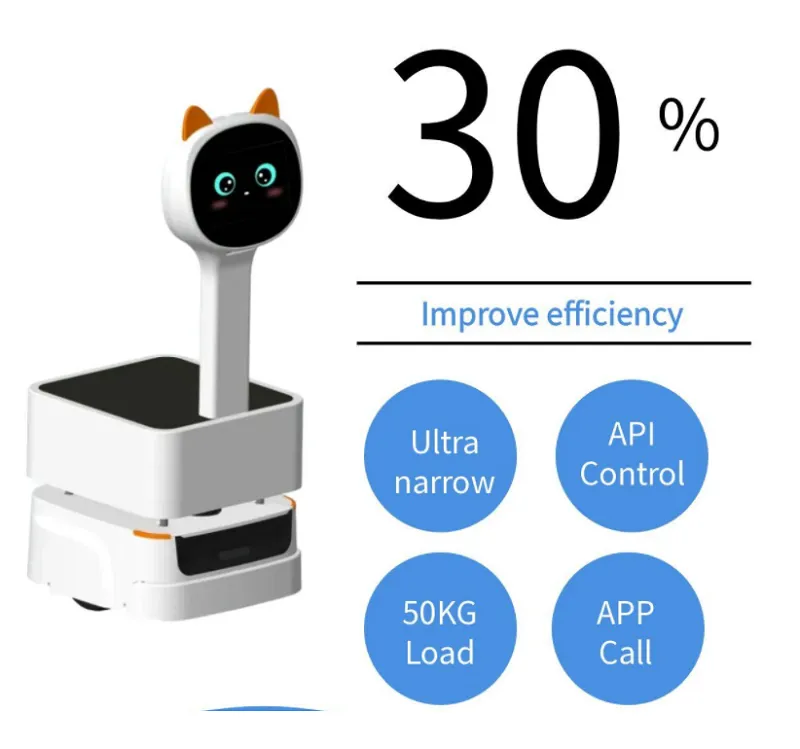
Fifty-kilogram platforms suit PCB magazine transfer, small-parts kitting, lab logistics and light restaurant back-of-house work. They are compact enough for 900 mm aisles, charge in about 90 minutes and can usually be lifted by two people for repositioning.
The 100 kg class
Above 100 kg you are moving pallets, tooling, or multiple totes at once. Expect a wider footprint, a heavier safety scanner configuration and higher braking demands. Do not treat a 100 kg rating as headroom: sustained loads above 80 percent of rating shorten battery life noticeably.
A quick sizing checklist
- Weigh the heaviest single unit plus its carrier, then add 20 percent margin.
- Measure the narrowest doorway and the turning radius at the tightest corner.
- Count the number of handoffs per shift, not per day.
- Confirm the API you need: call-button, PC dispatch, or a full fleet API.
Deployment is the real cost
Mapping, integration and staff habits account for most of the project budget. Choose a platform with an open SDK and documented API so the second and third robot cost far less than the first.